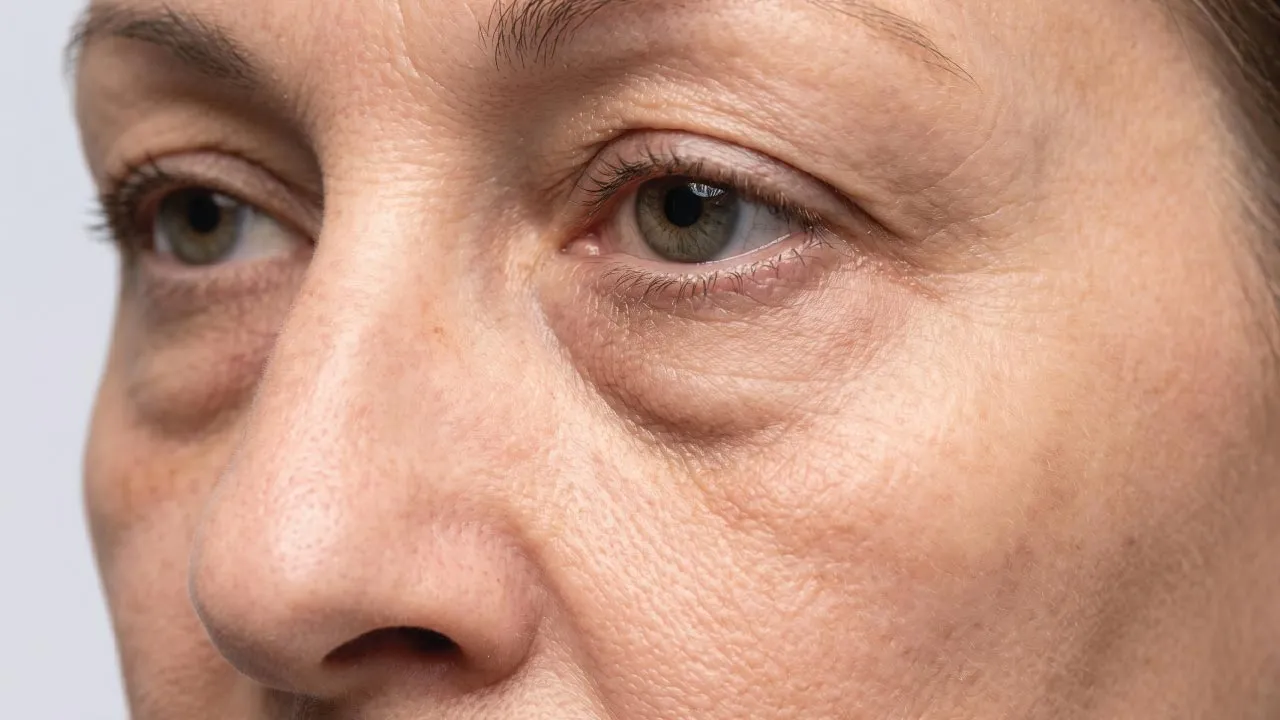
You get enough sleep, drink water, and still wake up with noticeable bags under your eyes. If this sounds familiar, the problem may not actually be tiredness.
Persistent under-eye bags can develop for several reasons. While lack of sleep can make the area around your eyes look more tired or puffy, structural changes in the lower eyelids can remain regardless of how well you sleep.
Understanding what is actually causing the appearance can help you decide whether simple lifestyle changes are enough or whether an evaluation by an oculoplastic surgeon may be useful.
Why Do Eye Bags Develop?
The lower eyelid contains delicate skin, muscle, connective tissue, and fat. As we age, the tissues supporting this area can change.
The structures that normally hold the fat around the eye in place may become weaker, allowing fat to become more prominent beneath the lower eyelid.
This can create the familiar appearance of bags under the eyes.
Genetics can also play a role. Some people naturally have more prominent lower-eyelid fat or develop under-eye bags at a younger age.
Lack Of Sleep Is Not Always The Main Cause
Poor sleep can contribute to puffy or tired-looking eyes, but it is not necessarily responsible for persistent eye bags.
After a few nights of better sleep, temporary puffiness may improve. However, if the lower eyelid consistently looks fuller even when you are well rested, there may be an underlying structural reason.
This distinction is important because sleep alone cannot reverse every cause of under-eye bags.
Aging Can Change The Lower Eyelids
The skin around the eyes becomes thinner and less elastic with age. At the same time, the tissues supporting the lower eyelid can change.
These changes can make the fat beneath the eyes more visible.
You may also notice a deeper-looking area beneath the eye at the same time. This is sometimes related to the tear trough, which is the groove between the lower eyelid and cheek.
The combination of lower-eyelid fullness and a deeper tear trough can create shadows that make the area look more tired.
Could Genetics Be Responsible?
Yes.
Some people naturally have a tendency toward prominent lower-eyelid bags. Family patterns may influence the shape of the lower eyelids, the amount of visible fat, skin characteristics, and the transition between the lower eyelid and cheek.
If eye bags have been present for years and are similar to what you have noticed in family members, genetics may be contributing.
Allergies And Fluid Retention Can Make Bags More Noticeable
Not every case of under-eye puffiness is caused by structural changes.
Allergies, nasal congestion, crying, high-salt meals, dehydration, and certain sleep positions can contribute to temporary fluid accumulation around the eyes.
Rubbing the eyes frequently can also irritate the delicate skin in this area.
If puffiness fluctuates significantly from day to day, fluid retention or another temporary factor may be contributing.
Eye Bags Or Dark Circles?
These are not necessarily the same thing.
Eye bags usually refer to visible fullness or bulging beneath the lower eyelids.
Dark circles can result from pigmentation, visible blood vessels, shadows created by the eyelid shape, or thinning skin.
You can have one without the other, or both at the same time.
This distinction matters because treatments that address lower-eyelid fullness may not necessarily correct pigmentation or every type of dark circle.
Can Skincare Get Rid Of Eye Bags?
Skincare can help improve the appearance and condition of the skin around the eyes, particularly when dryness, pigmentation, or mild puffiness is contributing to the appearance.
However, creams generally cannot remove prominent lower-eyelid fat or reverse significant structural changes.
If the main issue is a persistent bulge caused by lower-eyelid anatomy, an oculoplastic evaluation can help determine what options may be appropriate.
When Is Lower Eyelid Blepharoplasty Considered?
Lower eyelid blepharoplasty is a surgical procedure that can be used to address certain structural changes affecting the lower eyelids.
Depending on the individual anatomy, the procedure may involve repositioning or removing some lower-eyelid fat and addressing excess skin when appropriate.
Not everyone with eye bags needs surgery. The right approach depends on the cause, the amount of skin laxity, the position of the lower eyelid, the tear trough, and the overall appearance of the area.
A detailed examination is important before deciding whether blepharoplasty is suitable.
Why See An Oculoplastic Surgeon?
The area around the eyes is delicate and requires careful assessment.
An oculoplastic surgeon specializes in conditions and procedures involving the eyelids, tear drainage system, and tissues surrounding the eyes.
During an evaluation, the doctor may assess:
- Lower-eyelid fat
- Skin laxity
- Eyelid position
- Tear troughs
- Under-eye shadows
- Facial structure
- Eye surface and eyelid function
This helps distinguish between eye bags caused by structural changes and puffiness caused by temporary factors.
When Should Persistent Eye Bags Be Checked?
Most under-eye bags are not a medical emergency. However, an evaluation is worthwhile if the change is new, particularly if it is noticeably different between the two eyes.
Seek medical advice if swelling is sudden, one-sided, painful, associated with redness or vision changes, or accompanied by other concerning symptoms.
For long-standing cosmetic concerns, an oculoplastic consultation can help you understand what is contributing to the appearance and what treatment options may or may not be appropriate.
If your eye bags remain even after getting enough sleep, tiredness may not be the whole explanation.
Age-related tissue changes, genetics, lower-eyelid fat, tear troughs, allergies, and fluid retention can all contribute to the appearance of bags under the eyes.
The right solution depends on the cause. Improving sleep may help temporary puffiness, while structural lower-eyelid changes may require a different approach.
Want To Know What's Causing Your Eye Bags?
Persistent under-eye bags can have different causes, and treating them effectively starts with understanding the underlying anatomy.
Dr. Jyoti Batra Ohri, an oculoplastic surgeon, can evaluate the lower eyelids, surrounding tissues, and overall eye area to determine what may be contributing to persistent eye bags and discuss appropriate treatment options.
If your eye bags do not improve despite adequate sleep or are becoming more noticeable over time, schedule an oculoplastic evaluation to understand your options.
FAQs
Q: Why do I have eye bags even when I sleep well?
A: Persistent eye bags may be related to genetics, age-related changes, lower-eyelid fat, skin laxity, tear troughs, or facial anatomy. Lack of sleep is only one possible contributor.
Q: Can sleeping more get rid of under-eye bags?
A: Better sleep may reduce temporary puffiness caused by tiredness or fluid retention, but it generally cannot remove structural lower-eyelid bags caused by prominent fat or tissue changes.
Q: Are eye bags the same as dark circles?
A: No. Eye bags usually refer to fullness or bulging beneath the eyes, while dark circles may result from pigmentation, visible blood vessels, shadows, or thinning skin. Some people have both.
Q: Can allergies cause bags under the eyes?
A: Allergies and nasal congestion can contribute to temporary swelling and puffiness around the eyes. If puffiness fluctuates with allergy symptoms, treating the underlying problem may help.
Q: What is lower eyelid blepharoplasty?
A: Lower eyelid blepharoplasty is a surgical procedure used to address certain changes in the lower eyelid, such as prominent fat or excess skin. The technique depends on the individual's anatomy and goals.
Q: Should everyone with eye bags have surgery?
A: No. Surgery is not necessary for everyone. The appropriate approach depends on whether the bags are caused by structural changes, temporary puffiness, pigmentation, tear troughs, or another factor.
Q: When should I see an oculoplastic surgeon for eye bags?
A: Consider an evaluation if persistent eye bags concern you, especially when they remain despite adequate sleep or are becoming more noticeable. Sudden, painful, one-sided swelling or swelling with vision changes should be assessed promptly.

Your Search for the Best Ophthalmologist and Oculoplastic Surgeon in Delhi ends here. We are here to support you through your journey, making your experience as comfortable and positive as possible.

©Remedo2025 | DrJyotiBatra Ohri | All Rights Reserved | Digital Marketing by Remedo